Sensing Living Ecosystems
Development of technological mediation between humans and plants.
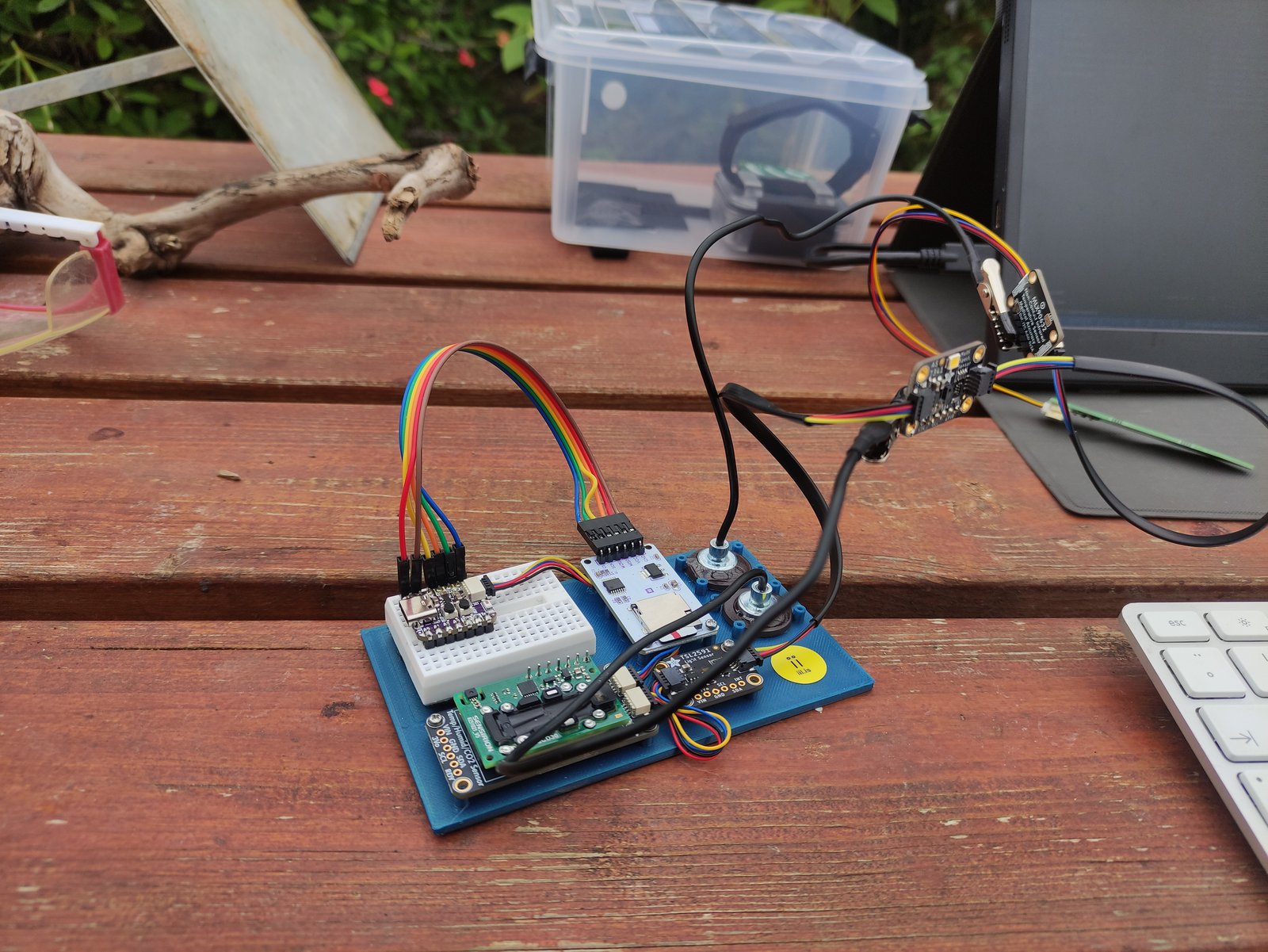
Sensing Living Ecosystems develops the Greenhouse Field Kit — an open hardware/software system for sensing the conditions plants live in and turning them into data we can read and work with. It treats a greenhouse or garden as a continuously changing field of light, gas, heat and moisture, and builds low-cost tools to make that field measurable.
The Greenhouse Field Kit
The Vegetal Media Greenhouse Field Kit is an affordable, open hardware sensor node built around an Adafruit QT Py ESP32-S2, with five environmental sensors on a single I²C chain covering air, light, surface and soil:
- Air — CO₂, temperature and humidity (Sensirion SCD30)
- Light — full-spectrum, infrared and lux (TSL2591)
- Spectral — ten channels from 415–680 nm plus Clear and near-infrared (AS7341)
- Surface temperature — non-contact infrared thermometer (Melexis MLX90632)
- Soil — capacitive soil moisture and soil temperature (Adafruit STEMMA Soil Sensor)
The node is headless: it samples every 500 ms to a local microSD archive and publishes over WiFi every two seconds via MQTT. Readings can be streamed live into Python, TouchDesigner or Max, or pushed through a cloud pipeline (HiveMQ → InfluxDB → Grafana). The full archive stays on the SD card, so the kit keeps recording with or without a network. A 3D-printed mount holds the sensors in a fixed geometry so readings stay comparable between kits. Firmware, Python tools, the printable mount and the build guide are open access.
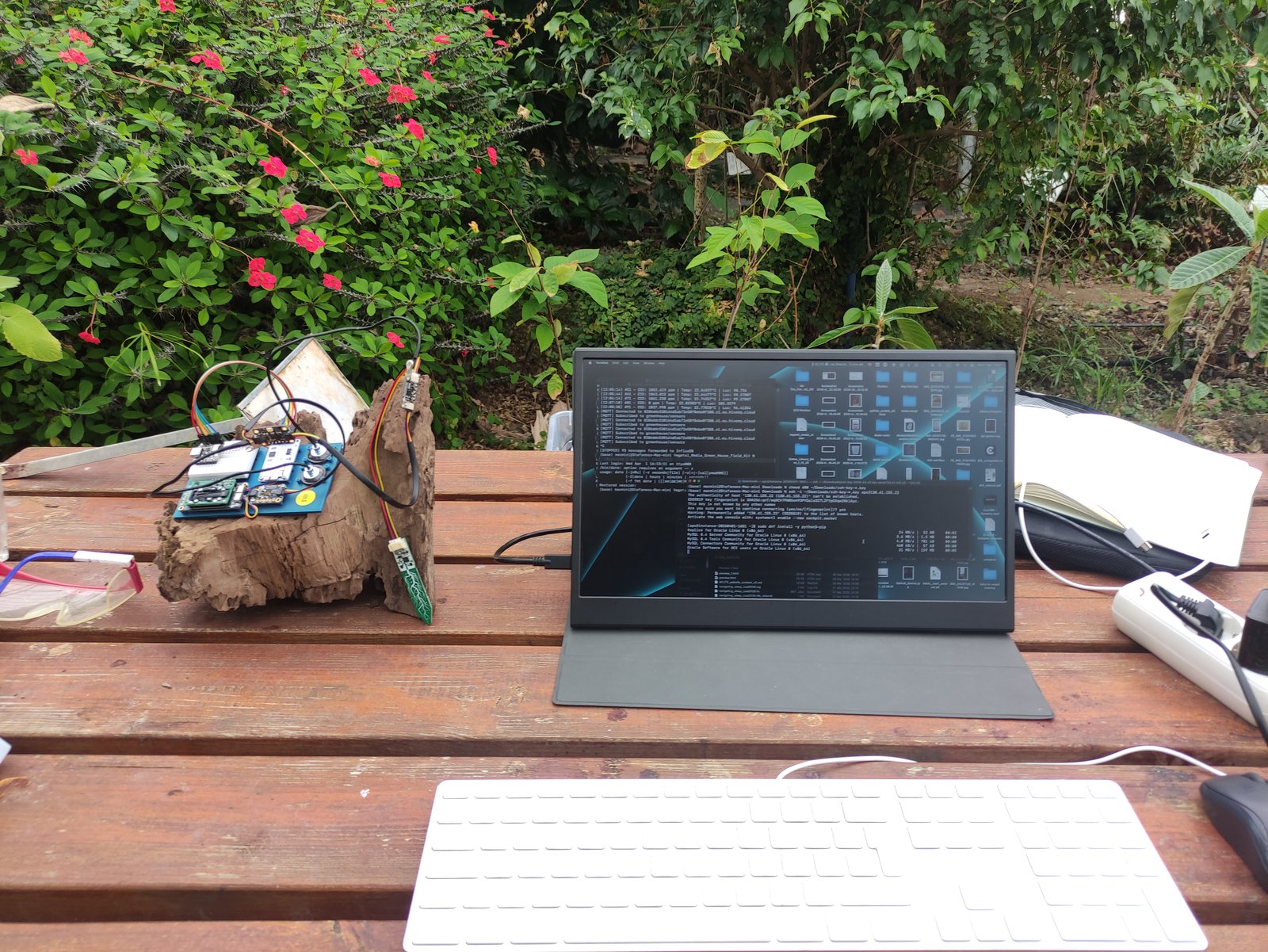
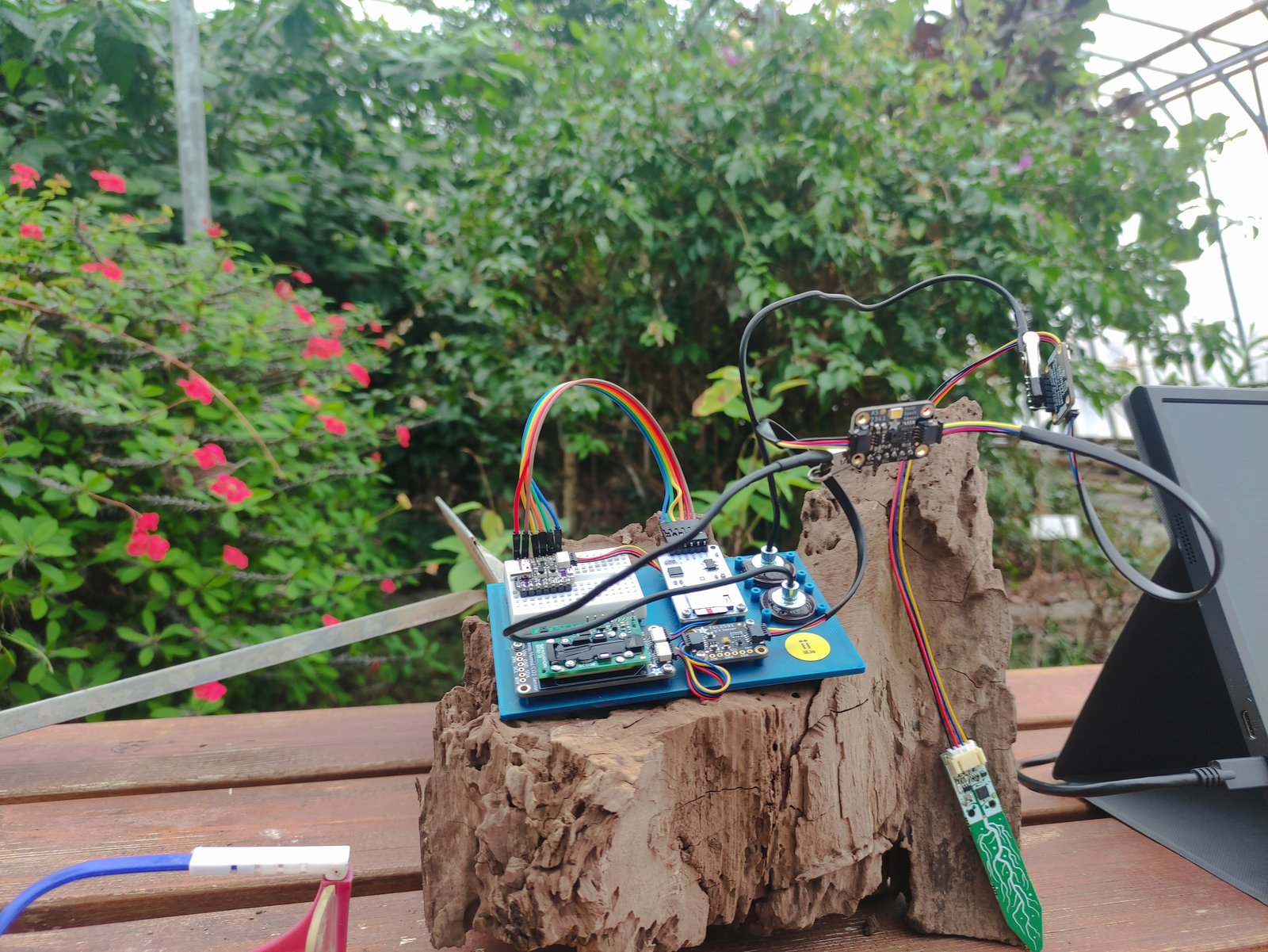
In the greenhouse
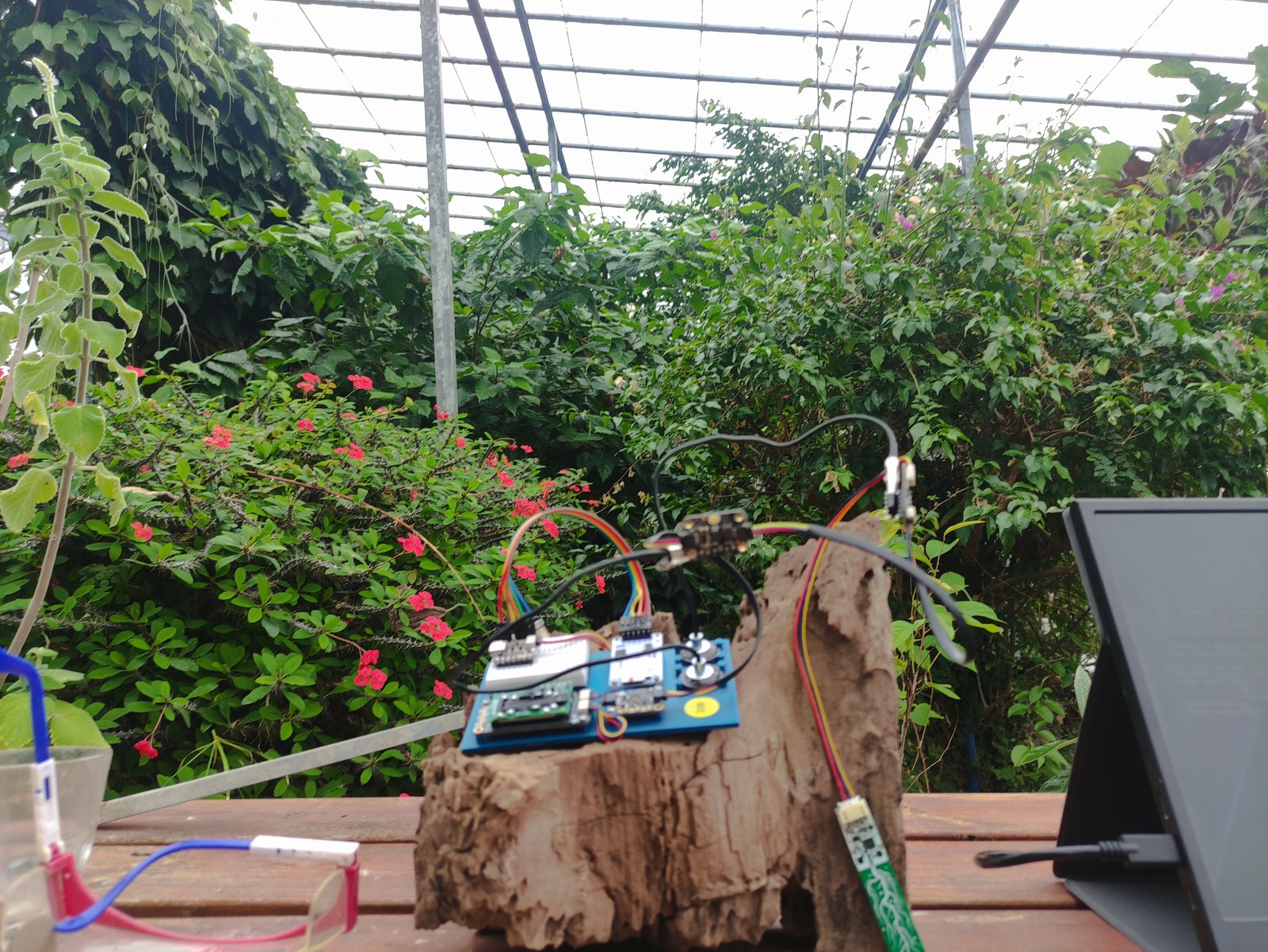
The kit was first set up inside a tropical greenhouse, logging CO₂, the spectrum of light through the glass, and the temperature of leaves and soil.
Out in the field
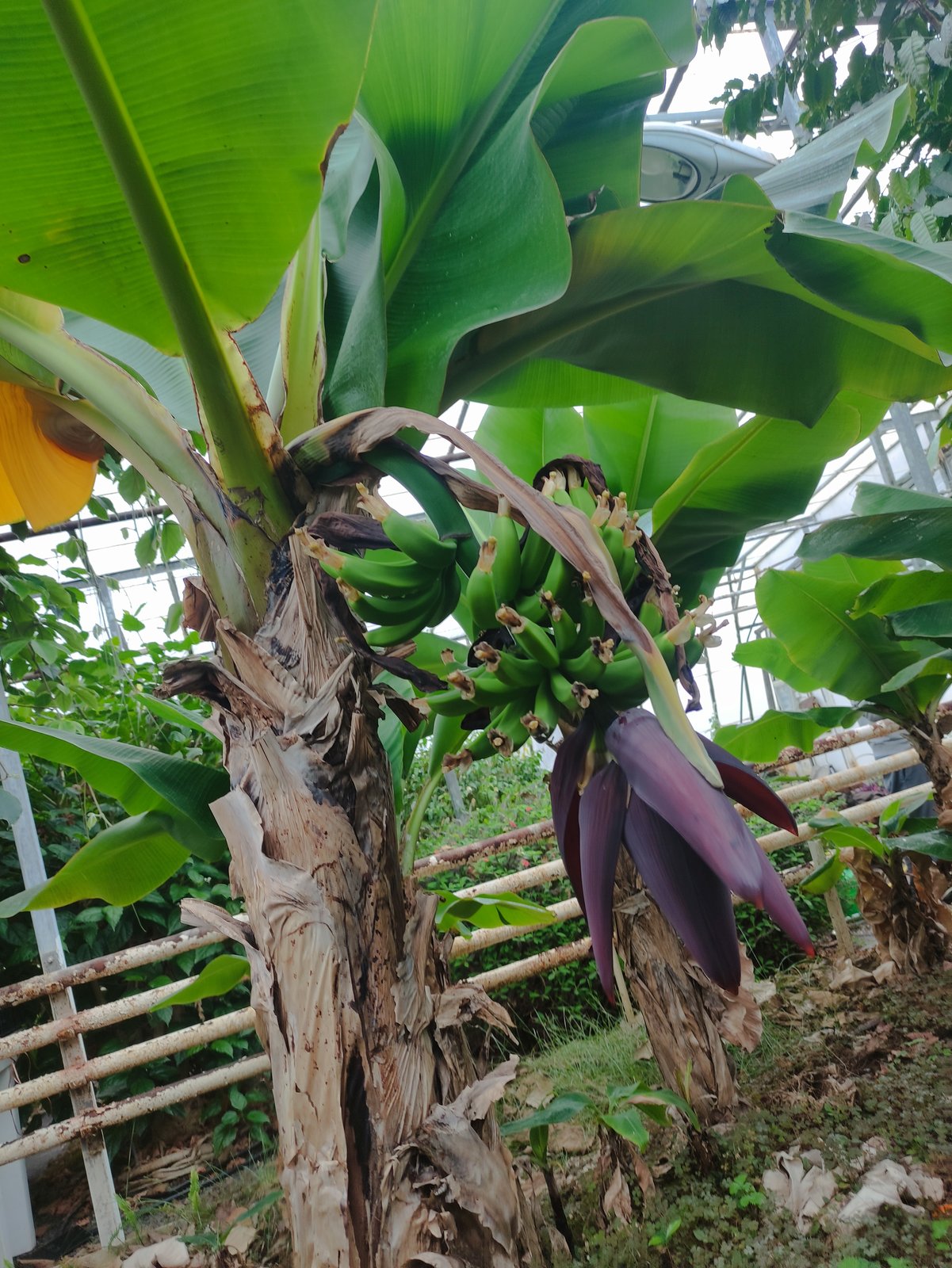
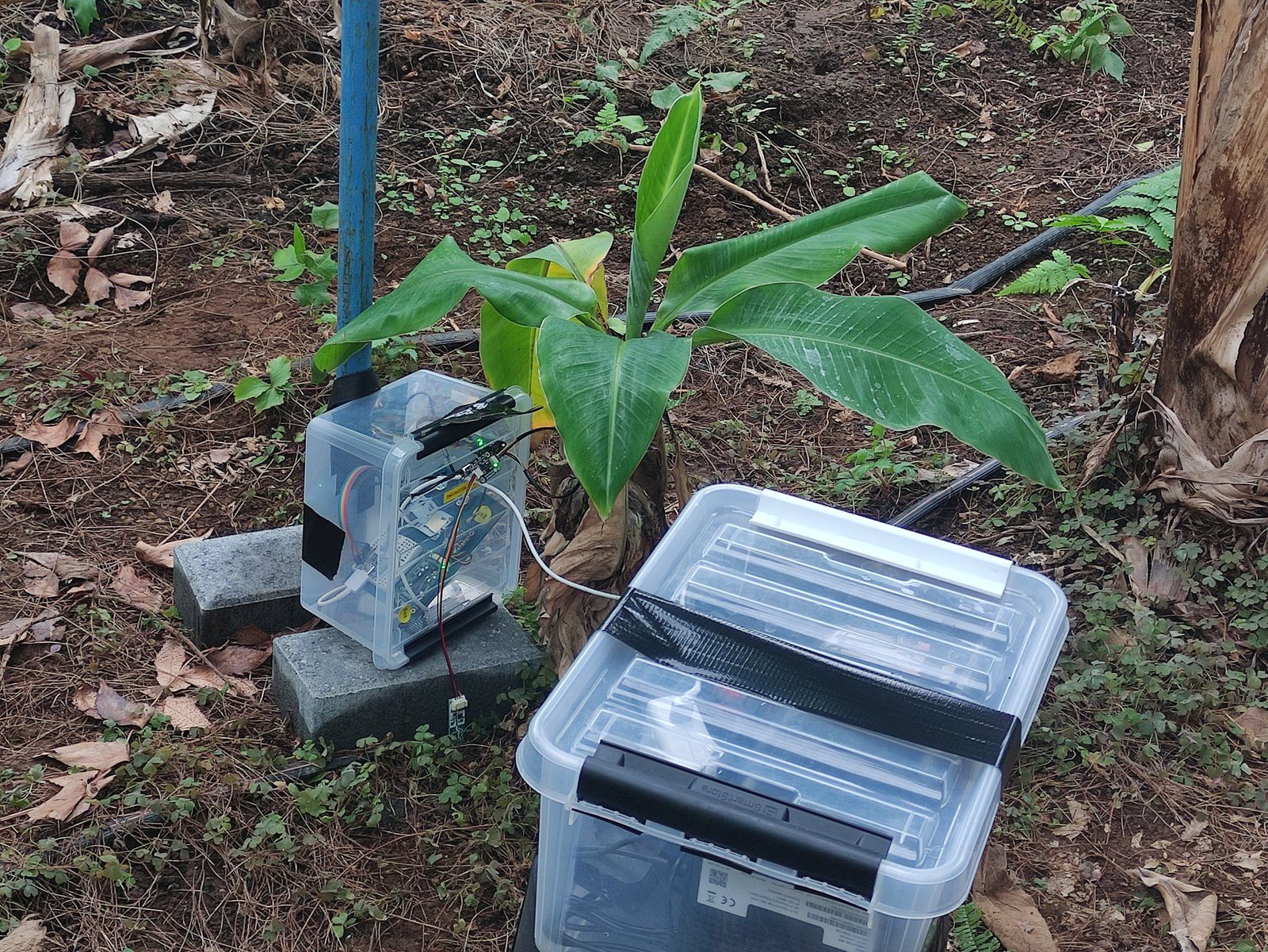
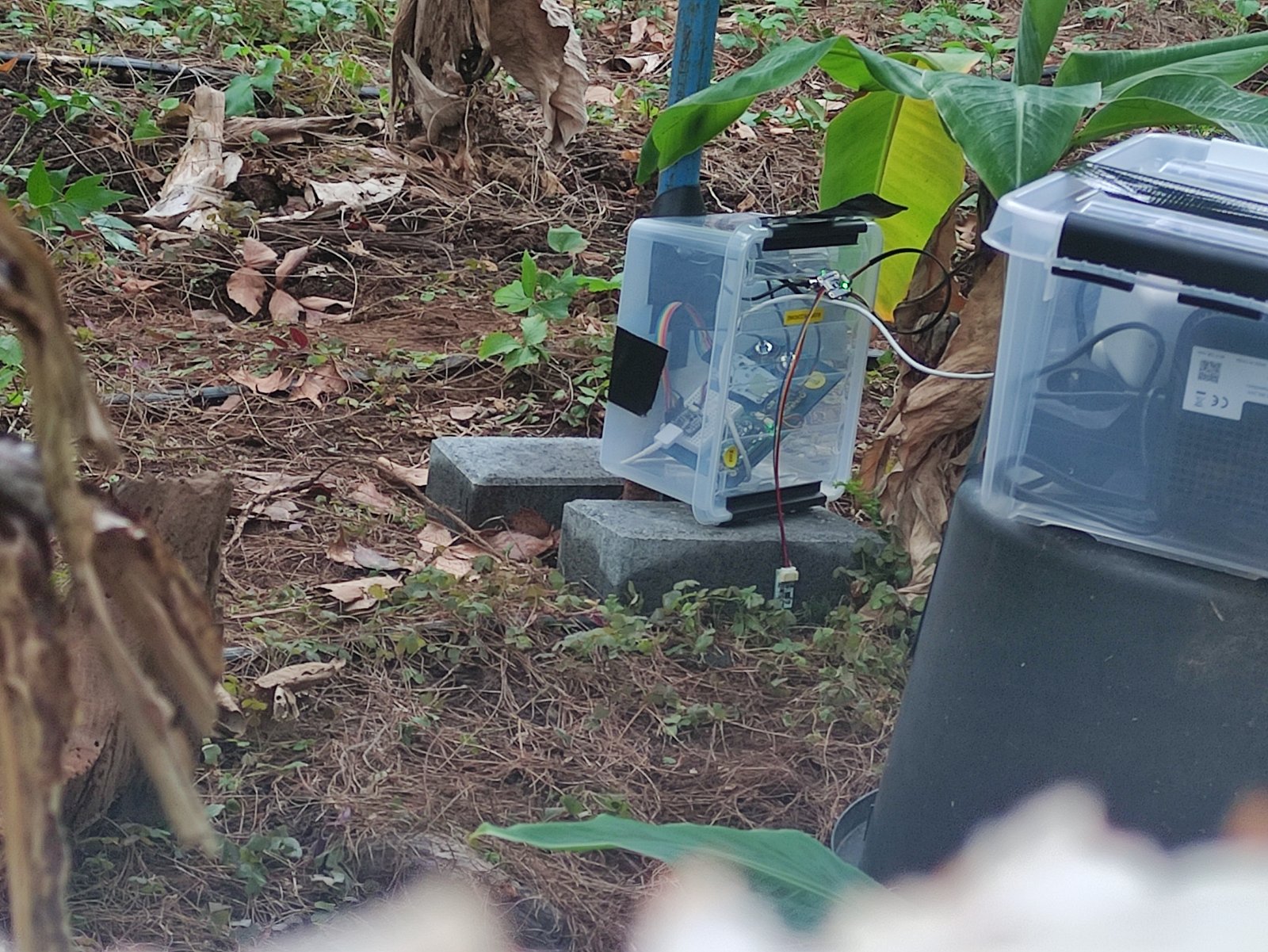
Sealed into a weatherproof enclosure, the same kit can be deployed outdoors — here at the base of a banana tree — to monitor air, light and soil over longer stretches. The hardware is low-cost and replicable, so several nodes can be distributed across an ecosystem.
Vegetal Media is part of the wider organium family of open components developed at the Intelligent Instruments Lab. By making the sensing of plant environments cheap, open and reproducible, it gives artists and researchers a shared basis for work on data perceptualization and the relationship between humans and plants.
The field kit was built to support the doctoral research of Thomas Pausz, whose PhD project at the lab is itself titled Vegetal Media. The project was developed at the Intelligent Instruments Lab, University of Iceland, and is funded by the University of Iceland Research Fund (Rannsóknasjóður Háskóla Íslands). Component reference and the wider organium family: iil.is/organium-elements.
References
[1] Intelligent Instruments Lab (2024) “Organium,” AudioMostly 2024. Available at: https://iil.is/pdf/2024_audiomostly_organium.pdf